Dr. Gymbro
←

#countermovement jump

2 articles
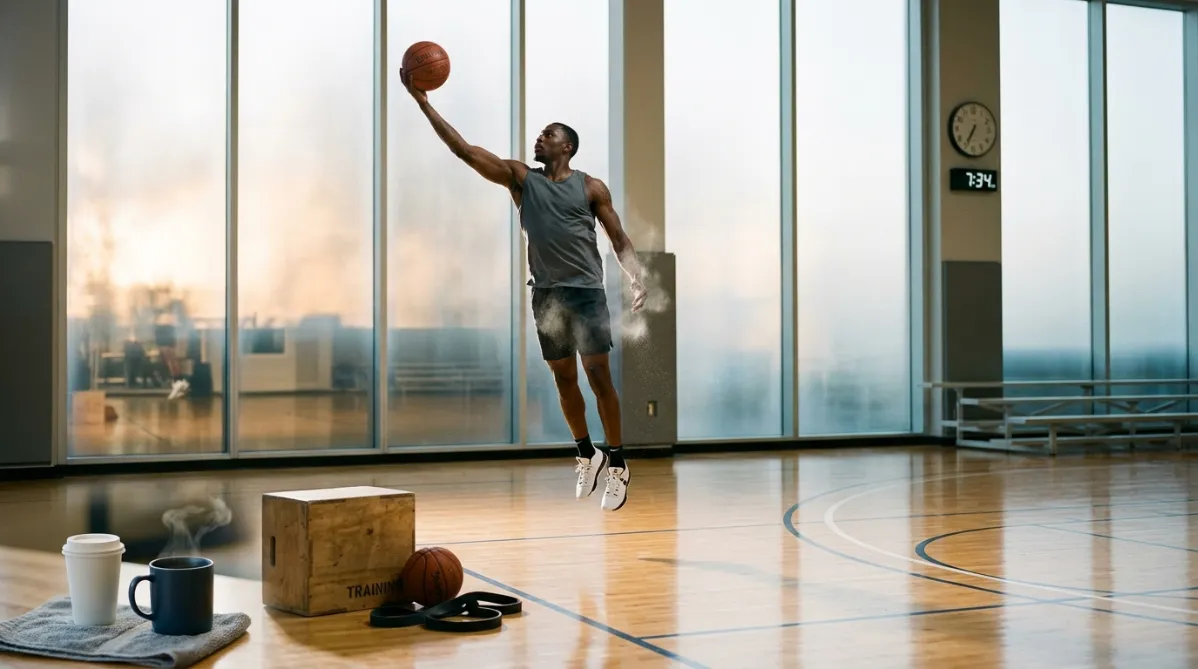
A wide, editorial-style photograph of a basketball player mid-air at the top of a vertical jump inside a sunlit indoor court, shot from a low angle so the athlete's silhouette rises against tall frosted windows glowing with soft morning light. The player wears a plain charcoal tank and white sneakers, with chalk dust drifting off their hands and catching the light. The polished honey-toned hardwood floor reflects the figure faintly, with crisp painted court lines leading the eye across the frame.

In the foreground at the lower left, slightly out of focus, a small wooden plyometric box sits on the floor beside a matte ceramic cup of black coffee and a plain white paper cup, placed neatly on a folded gray towel. Thin steam curls from the ceramic cup. They stand for the question of caffeine versus warm-up without any text or labels.

The color palette is calm and modern: warm amber wood, soft cream, muted slate blue shadows, and a touch of burnt orange from a basketball resting near the box. Light is natural and diffused, with gentle rim lighting on the athlete's shoulders and a shallow depth of field that blurs the background bleachers into creamy shapes. The composition has generous negative space on the right third, suited to a headline overlay, in a clean, contemporary magazine style with fine film grain, subtle contrast, and a quiet, focused mood. No text, no logos, no futuristic elements.
science research

Caffeine Before Jumps Did Nothing Extra. The Warm-Up Did the Work

BY DR. GYMBRO ·

Caffeine plus a drop-jump warm-up sounds like a recipe for higher jumps, but a new trial in elite basketball players found the coffee added nothing extra. The individualized drop-jump routine produced a clear, short-lived jump boost on its own. Caffeine at 3 mg/kg didn't change peak height, timing, or total PAPE compared with placebo. Individual responses varied widely, so some athletes may still react differently. Here is what the study shows, what it doesn't, and how to set up your own jump primer.
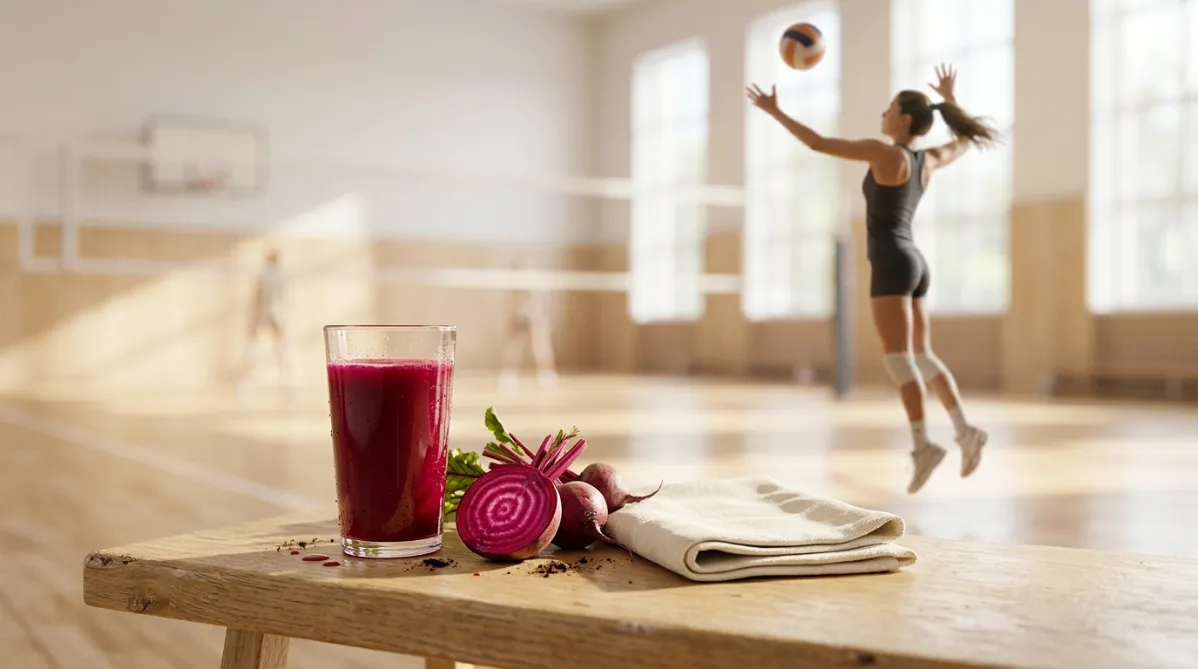
A wide, editorial-style photograph of a deep magenta glass of beetroot juice standing on a pale oak gym bench in soft morning light. Beside it sit a halved raw beetroot with vivid fuchsia and white concentric rings, a few whole beets with leafy stems, and a folded cream towel. Behind them, slightly out of focus, a female volleyball player in a fitted charcoal athletic set is caught mid-jump on an indoor court. Her arms are raised, her ponytail lifts, and a volleyball hangs near her fingertips. The polished wooden court floor reflects warm light from tall windows. The background fades into a creamy blur of pale wood tones, soft white walls, and hints of a net.

The composition follows a rule-of-thirds layout. The juice and beets fill the lower left third in crisp focus, and the jumping athlete is the softly blurred focal point on the right. Fine condensation beads on the glass, and a few juice droplets rest on the bench like small jewels. The palette is limited and modern: rich beet magenta, warm honey wood, soft off-white, and charcoal accents. The light is natural and diffused with gentle long shadows. The shallow depth of field suggests a high-end lifestyle and health magazine. The look is clean and minimal with plenty of negative space in the upper left for a title overlay. The mood is energetic yet calm, hinting at recovery and bounce. It has fine film-like texture and true-to-life color, with no text, logos, or futuristic elements.
nutrition

Beetroot Juice and Jump Height: Does Day 3 Bring the Bounce Back?

BY DR. GYMBRO ·

Two hundred loaded jumps leave legs wrecked, but could beetroot juice bring the bounce back by day three? A new crossover trial in female volleyball players found higher jump height at 72 hours and a better calf pain threshold under beetroot juice. Soreness, agility, swelling and most strength measures were no different, and the overall jump interaction was only a trend. This article breaks down what the study found, how athletes might use beet juice after heavy plyometric work, and why the small, women-only sample calls for caution.

This page is available in